Thursday, July 30, 2009

Jen Zahigian - Featured Artist

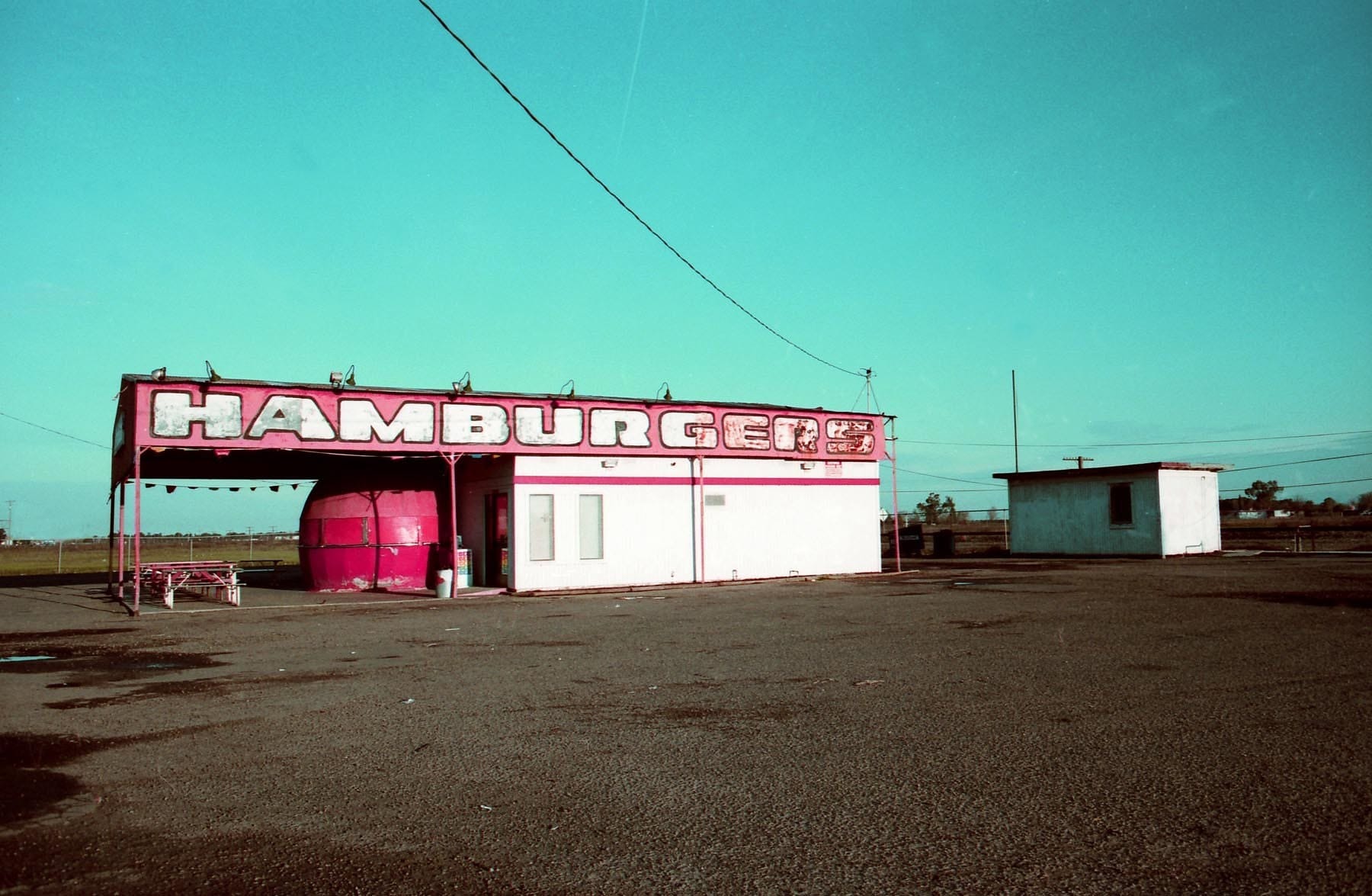
Jen Zahigian - Mammoth Orange

"Mammoth Orange"


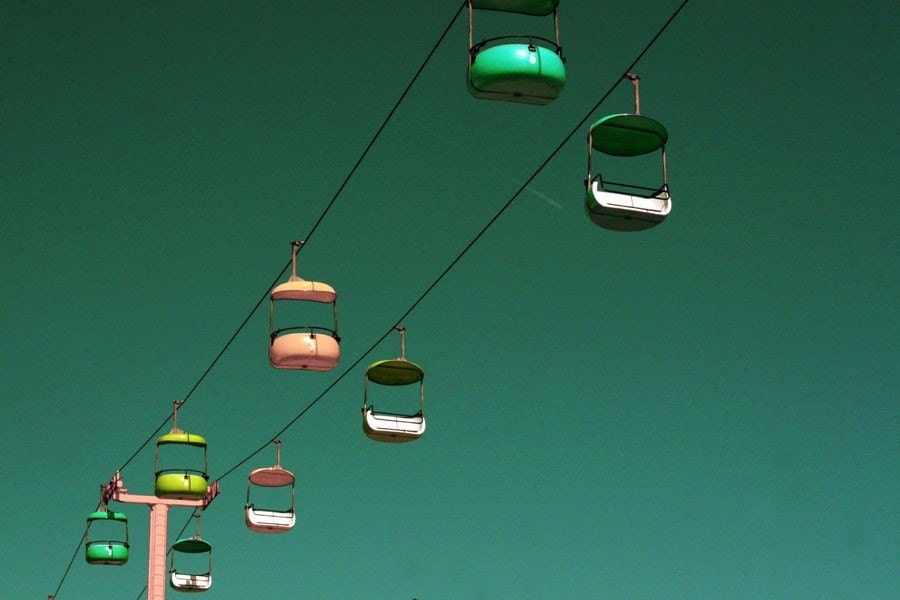
Jen Zahigian - Skycab

"Skycab"

Photographer Jen Zahigian, a resident of Oakland, California’s Waterfront District, has a relationship with photography that dates back to her childhood when her grandfather introduced her to the art. Her personal history informs her work, as does the mid-twentieth century history of California’s popular roadside attractions and establishments. While Zahigian’s photographs are a document of sites that have long held her appreciation for their aesthetic appeal and their place in her memory, they also express a philosophical position associated with the mid to late twentieth century American landscape of the road.

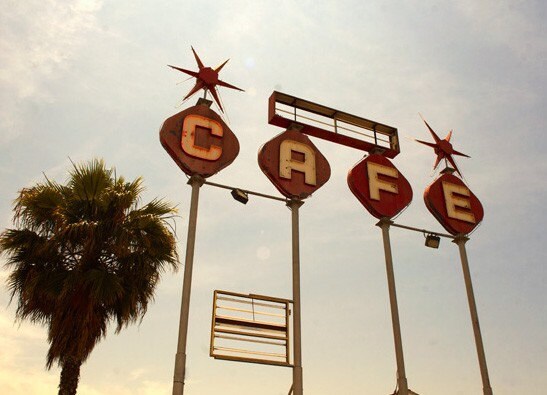
Jen Zahigian, Starlight Cafe

“Starlight Cafe”

Many of Zahigian’s photographs depict California highway establishments and their signage. She frequently takes as her subjects such places as diners, motels and convenience stores. Clearly Zahigian has an appreciation for their dated aesthetic, with their patina of rust and neglect. Some of these subjects are sites from her youth, such as the desolate hamburger stand in “Mammoth Orange,” and the interior of “Pot Pie Shop.” Frequently, her photographs are composed to present only bits of information. Yet there is always enough that the results are deeply evocative, employing an economical and stately formalism.

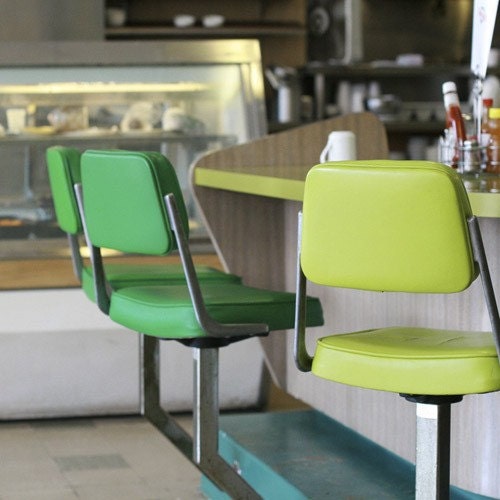
Jen Zahigian - Pot Pie Shop

"Pot Pie Shop"

Because many of Zahigian’s photographs are related explicitly and implicitly to the road and travel, they bear a bittersweet sense of impermanence and transience. Zahigian’s subject matter speaks to a sense of nostalgia for an American landscape that rushes past the windshield during a journey away, or back home.

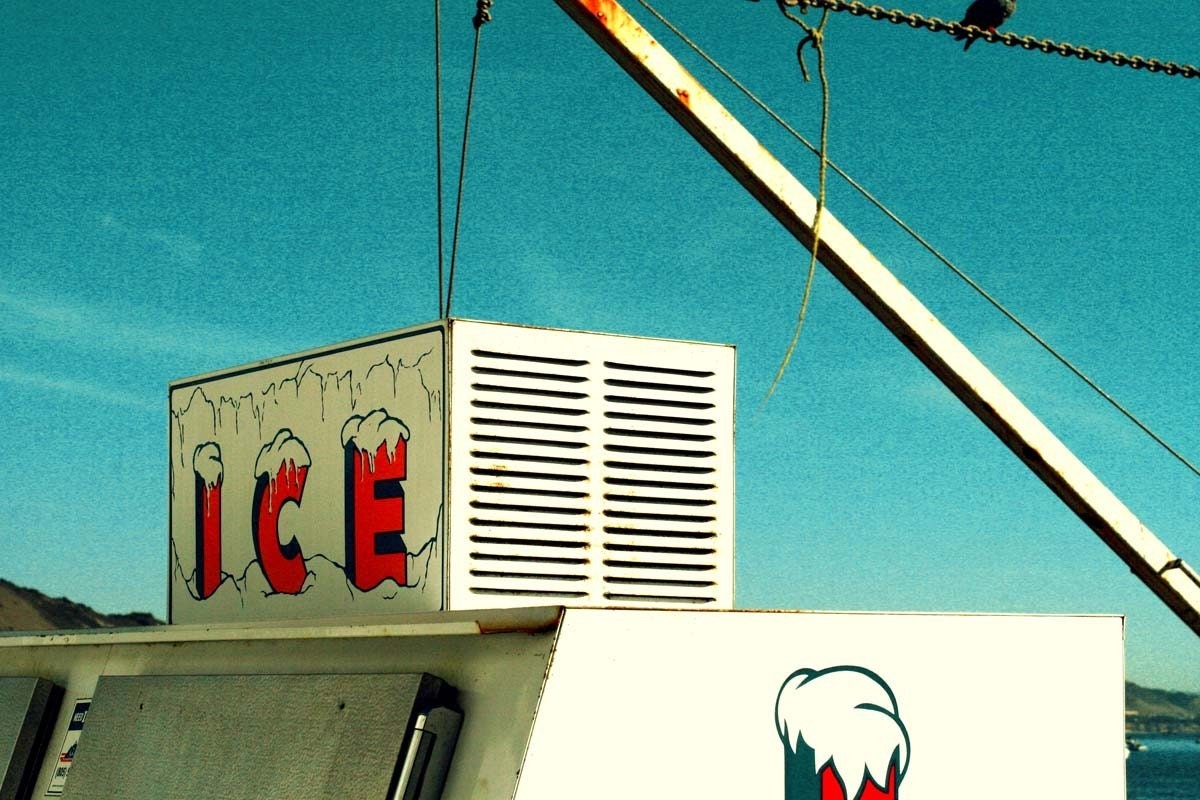
Jen Zahigian - A Warm Day for Ice

“A Warm Day for Ice”

A distinctly American brand of existentialism is evident through the tone, composition, and subject matter of Zahigian’s photographs. This lonesome highway existentialism is typified by such New Hollywood road movies as Dennis Hopper’s “Easy Rider” (1969), and in particular Monte Hellman’s “Two Lane Blacktop” (1971). Many of Zahigian’s photos could almost be stills from “Two Lane Blacktop,” a film marked by quietude and a foreboding sense of alienation.

Jen Zahigian’s camera searches for and selects meaning from historical roadside monuments—monuments to travel, transience, and movement. The viewer is put in the position of the existential wanderer, making meaning from the associations they draw individually from her photographs.

Jen Zahigian’s photographs are exhibited extensively in many galleries and boutiques in the Bay Area, and have been exhibited at SFMOMA. Her photographs can also be seen on-line at these sites:

www.jenzahigian.com
Roadside Photographs on Etsy
That Wondrous Time - Blog

Wednesday, July 29, 2009

Just Say No, Not 'til After Work.

I don’t hear it very often these days, but in the late 1960’s and early 1970’s, back when marijuana had seeds in it, an ounce of the stuff was referred to as a “lid.” A lid is also a slang term for a hat.


To which type of lid Sid and Marty Krofft were referring with their show Lidsville is the fuel for much tongue in cheek speculation. Lidsville is as jarringly bizarre, psychedelic and colorful as any Sid and Marty Krofft production, true enough. However, within the work there is no evidence that Lidsville refers to marijuana or any other psychedelic chemical compound.

Sid and Marty Krofft, do not deny that they may have taken psychedelic drugs in the 1960’s and ‘70’s, but they have always vehemently denied that they were under the influence of drugs during the production of their shows and that their shows were influenced by or indicative of a drug experience. When we give Sid and Marty the benefit of the doubt, or better yet, throw the whole issue out entirely, Lidsville is even more fantastic and complex.


To suggest that there is a prior drug experience and language system (drug slang) that provides the basis for Lidsville is to diminish, and marginalize a surreal and unique text. Such an interpretation looks outside of the text for meaning and reduces Lidsville to a mere symbol system, and a not-so-subtle inside joke. Dealt with on its own terms Lidsville is a highly (pun intended) imaginative product of much hard physical and creative work. Lidsville doesn’t have to be a code, like your tax return or something, it can be so much more.

I will concede that drugs do provide an apt simile for the experience of watching Lidsville in that it’s like good, clean acid—a little goes a long way, and you’ll never be the same once it's over.

Tuesday, July 28, 2009

Now I've Gone Away

As Trees recently noted, we are living in a 'post-Stamos' era. Anyone over 25 will surely remember Jesse and the Rippers and their soulless cover of "Forever" by The Beach Boys. Unfortunately, for many, seeing the song performed on Full House may have been their first exposure to what is arguably one of the best Beach Boys songs not written by Brian Wilson. I don't blame Stamos especially. If given the chance it would be hard to say no to performing with any Beach Boys incarnation. Let's just say we forgive and truly, finally, forget.


Saturday, July 25, 2009

MacArthur Starship

"While Riley slept, they downloaded the history of humanity, alien insights, and a mass of knowledge into his memory"...


"We deal now, not with things of this world alone, but with the illimitable distances and as yet unfathomed mysteries of the universe. We are reaching out for a new and boundless frontier. We speak in strange terms of harnessing the cosmic energy...of spaceships to the moon...of ultimate conflict between a united human race and the sinister forces of some other planetary galaxy; of such dreams and fantasies as to make life the most exciting of all times." - General MacArthur's Thayer Award Speech -- Duty, Honor, Country (1962)


Thursday, July 23, 2009

Tracy Jager – Featured Artist

Tracy Jager, the fifth stage of sleep, 8X8in., Collage

Tracy Jager, the fifth stage of sleep, 8X8in., Collage


he had big dreams

He Had Big Dreams 8x10in

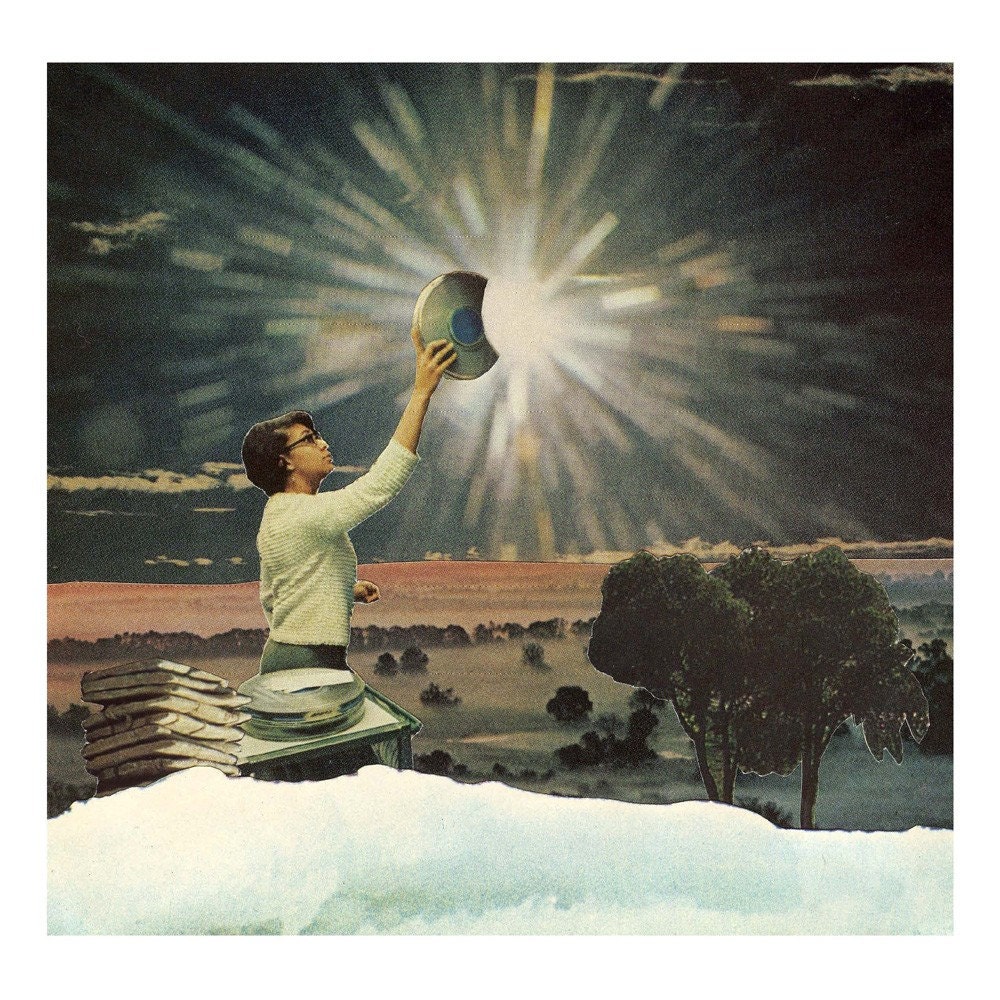
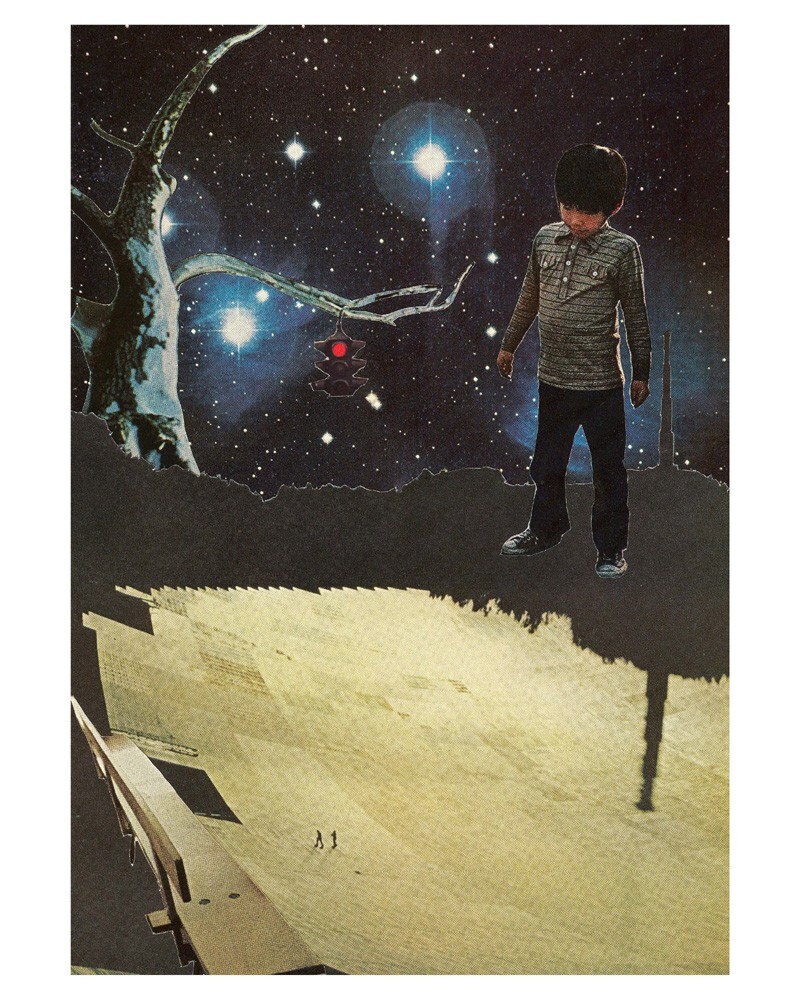
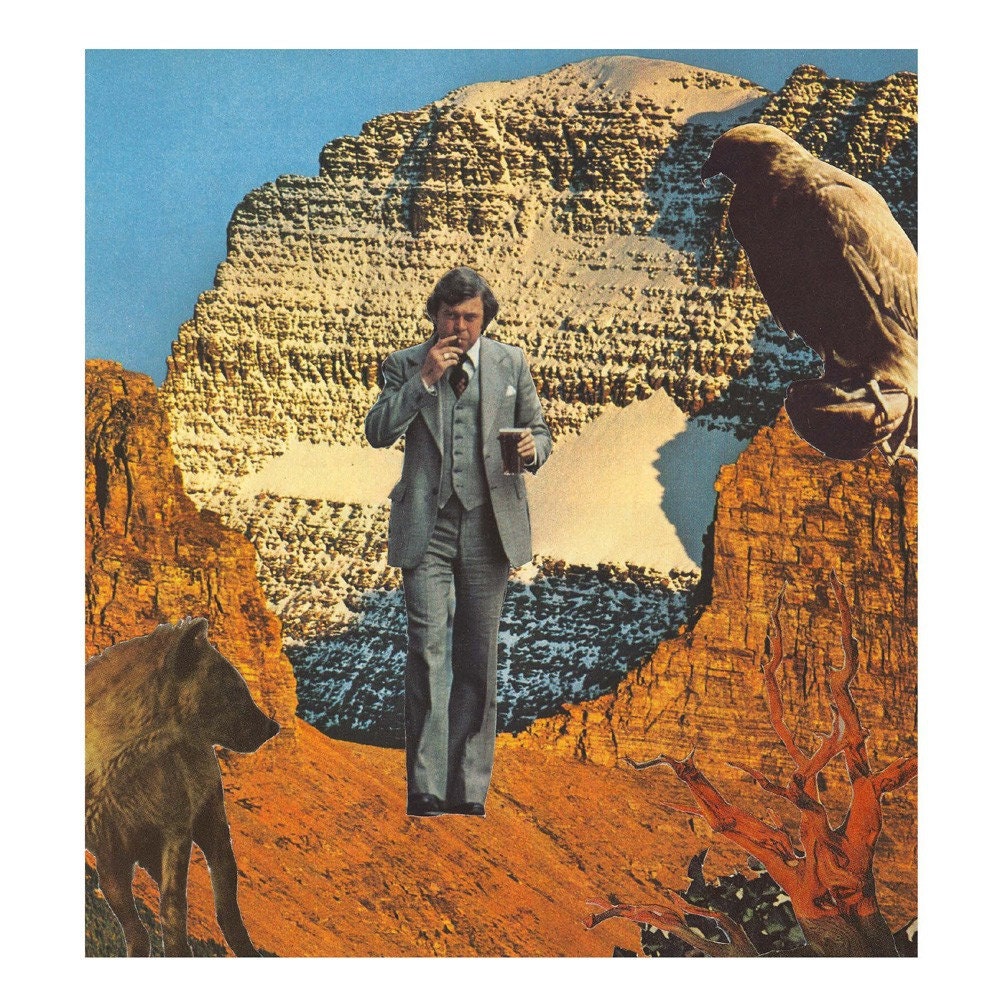
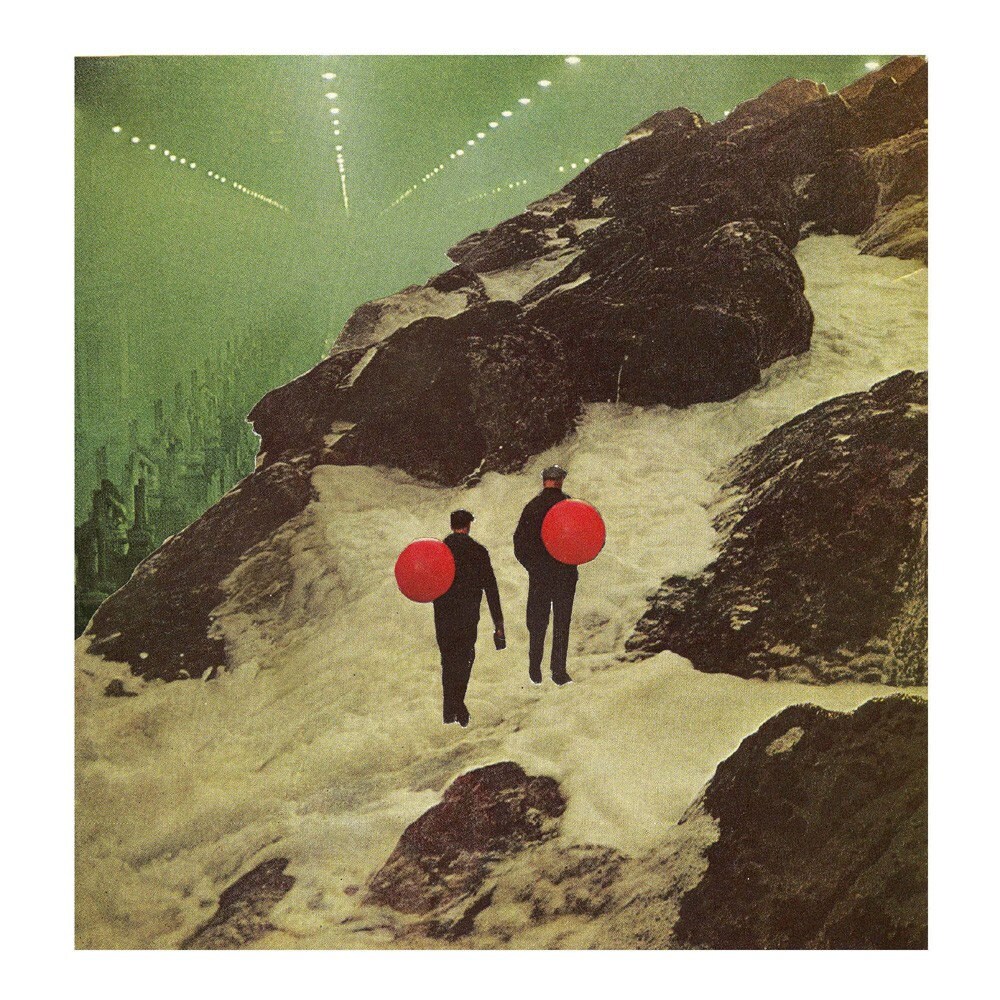
Vancouver based artist Tracy Jager makes collages that are rich with poetic ambiguity. Using imagery from the 1960’s and 70’s, her collages draw from historical and contemporary realist art movements. Themes of work/activity, human relationship with the environment and transportation, both literal and figurative, are apparent in her work.

Tracy Jager, the process itself brings the rewards 8X8 collage

The Process Itself Brings
the Rewards, 8X8in

Like the 1960’s collage work of Richard Hamilton, Jager’s collages frequently depict human figures in a naturalistic figure/ground relationship. Figures exist in more or less sensible spatial relationship to one another within the pictorial environment. The pictorial environment, a conflation of landscape images recombined with elegant formal cohesion, create a dream-like context for the figures within. The figures are often engaged in some type of work or activity rendered indistinct by their strange surroundings.

Tracy Jager, he'd go the distance, 8X8in

He'd Go the Distance, 8X8in

There is a preponderance of pronouns in Jager’s titles suggesting that the depicted figures are her subjects with whom she wishes the viewer to identify. Perhaps the surrealism of the landscape is a result of the work enacted by Jager’s subjects, or perhaps in spite of it. Still a more interesting notion supported by the work is that the landscape is reflective of the mental states of the subjects brought on by an involvement with their activities. A strength of Jager’s collages is that they pose more questions than they seek to answer.

Similar to the figures in the paintings of Neo Rauch, who are also involved in some ambiguous yet seemingly purposeful endeavor, Jager’s subjects seem at ease within the disjuncture around them. That Jager utilizes images from the 1960’s and 70’s further distances the subjects of her work from contemporary reality. As with Rauch, this retro feel harkens to social realism, though the connection is less overt than in Rauch’s work.

Tracy Jager, you'd planned to move with a kind of largeness, 8X8

You'd Planned To Move with a
Kind of Largeness, 8X8in

Various modes of transportation are presented in the collages. Cars, trucks and boats assume the same naturalistic figure/ground relationship as the subjects of the work. These vehicles could refer literally to travel and work, or more likely they function on a metaphorical level and refer to a movement of the mind.

Tracy Jager’s collages can bear many satisfying interpretations, from a purely formal read to the more allegorical. Whatever other interpretation, the collages all seem to allude to Karma Yoga, or a state of transcendence brought on by total immersion in an activity for the sake of itself.

See more collages in Tracy's shop living feral.